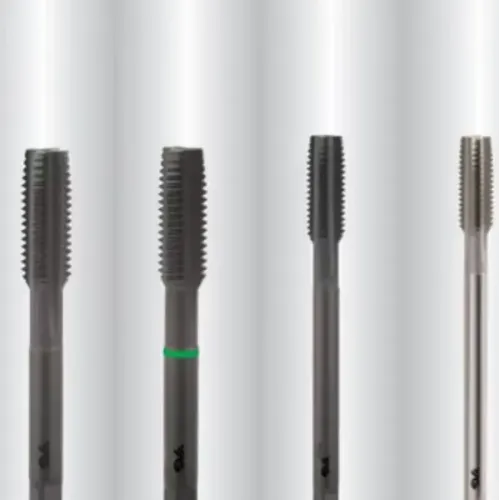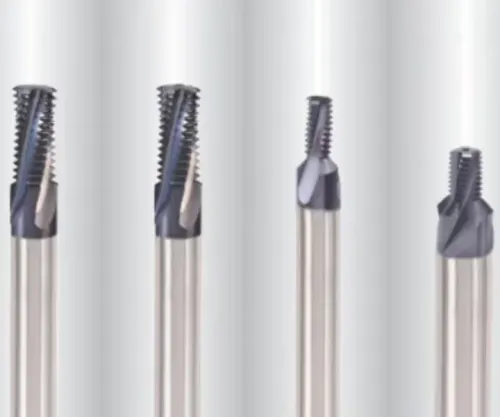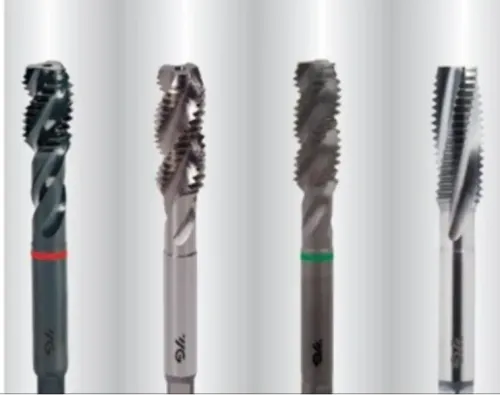

Threading hundreds of through holes can expose weaknesses that remain hidden during a small trial. Chips may interfere with the process, tap life can become inconsistent and unexpected breakage can interrupt an otherwise automated production cycle. A correctly selected spiral point tap can be useful for suitable through-hole applications because its cutting action is designed around effective chip management.
Manufacturers in Delhi evaluating this tapping method should consider the complete process before standardising a tool.
What Is a Spiral Point Tap?
A spiral point tap incorporates geometry at the cutting end that influences the direction in which chips move during threading.
It is commonly associated with suitable through-hole applications, where there is sufficient space beyond the required thread for chips to move forward.
That distinction matters.
A tap should never be selected solely because the thread diameter and pitch match the drawing. Hole configuration and chip evacuation are equally important.
Confirm That the Hole Is Suitable
Before choosing a spiral point tap, verify that the hole is actually a through hole and that there is sufficient clearance beyond the threaded length.
For a blind-hole application, chip behaviour requires different consideration because there is no open exit below the thread.
This is why providing the supplier with the hole type and depth is essential.
Match the Tap to the Material
Workpiece material affects cutting load, chip behaviour, heat and tool wear.
Steel, stainless steel and other engineering materials should not automatically be tapped using identical conditions.
When selecting the tool, provide the material grade where possible rather than describing the workpiece simply as "metal."
The more accurate the application information, the easier it becomes to identify an appropriate tapping solution.
Check the Tapping Hole
Incorrect pre-drilled hole size is a common source of threading difficulty.
If the hole is too small, the tap may encounter excessive cutting load and torque. If it is too large, the resulting thread may not meet the required engagement or specification.
The correct tapping-hole size should therefore be established from the required thread and relevant engineering data.
Hole quality also matters. Misalignment or a poorly drilled entry can affect tapping performance.
Control Alignment and Lubrication
A tap entering the hole at an angle can experience uneven loading and increased breakage risk.
Machine condition, holder alignment and workpiece positioning should therefore be checked whenever failure rates increase unexpectedly.
Suitable cutting fluid or lubrication can also affect friction, heat and thread quality. The correct approach depends on the material, tool and machining process.
Evaluate a Supplier on More Than Availability
When a spiral point tap becomes part of repeat production, procurement teams need both accurate specification and dependable replenishment.
R.S. Tools & Engineers Pvt. Ltd. supplies threading tools and related industrial solutions to customers in Delhi. Buyers approaching the company should provide thread size, pitch, hole type, material, thread depth, machine details and expected quantity wherever possible.
This enables a more technically useful discussion and reduces the risk of ordering based on incomplete information.
Establish the Process Before Full Production
Before releasing a large batch, test the tapping process on representative components.
Inspect thread quality and monitor:
Tap torque or machine load where available
Chip evacuation
Thread dimensions
Tool wear
Number of threads per tap
Breakage frequency
Once the process is stable, record the successful parameters for repeat production.
For Delhi CNC machining companies and component manufacturers, a spiral point tap can be an effective solution when the through-hole application, workpiece material and machining conditions are compatible. The strongest results come from treating tapping as an engineered process rather than simply selecting a tool by thread size.
Tap torque or machine load where available
Chip evacuation
Thread dimensions
Tool wear
Number of threads per tap
Breakage frequency