
Straight flute taps suit short-chipping materials and controlled cutting conditions, but they are not a universal replacement for spiral-flute or spiral-point taps. By matching the tap to the thread specification, workpiece material, hole geometry and cutting method, you can reduce torque, prevent chip packing and produce a more accurate internal thread.
Key takeaways
- Use straight flute taps when controlled chip holding suits the material and hole.
- Match tap size, thread form, pitch, material, and hole type before cutting.
- Drill the hole to the specified diameter and remove burrs before tapping.
- Keep the tap aligned and clear chips without forcing the tool.
How straight flute geometry controls chips and cutting
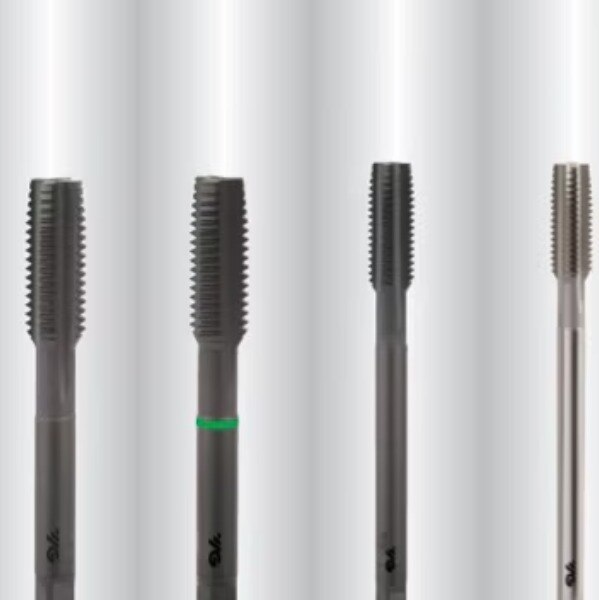
A straight flute tap uses axial flutes running parallel to the tap axis. The cutting edges remove material as the tool advances, while the flutes hold chips rather than deliberately pushing them forward or pulling them back. That neutral chip path makes the geometry less dependent on a helical flute’s chip-transport direction.
The advantage appears when cutting conditions are interrupted or the material breaks into short chips. Suitable examples include:
- Grey cast iron, compacted graphite iron, brass and bronze
- Interrupted holes, cross-holes or keyways where a helical chip flow could create uneven loading
- Blind holes in short-chipping material with enough unused depth below the finished thread for chip storage
A straight flute tap is not automatically the safest choice for every blind hole. Chips can pack at the bottom, increasing torque and tearing the thread; a spiral-flute tap usually pulls chips toward the shank. In a clean through-hole producing long, continuous chips, a spiral-point tap normally drives chips forward and reduces recutting.
Chip path comparisons make the distinction clear:
| Option | Chip movement | Practical consequence |
|---|---|---|
| Straight flute tap | Chips remain in the flutes | Useful for short chips; requires chip space |
| Spiral-point tap | Chips move forward through a through-hole | Suits long chips in clean through-holes |
| Spiral-flute tap | Chips move back toward the shank | Suits many blind-hole applications |
An interrupted hole can still cause impact loading and a locally oversized or torn thread, so rigid alignment and support remain essential. Straight-flute geometry improves control; it does not replace chip evacuation planning.
Match the tap to the thread, material and hole
Start with the drawing: a straight flute tap is suitable only when its thread form, size, tolerance, material capability and hole geometry all match the finished internal thread.
| Check | What to match | Decision |
|---|---|---|
| Thread standard | Metric thread or Unified thread, including the correct nominal diameter and pitch length | Reject a tap from the other standard; similar-looking threads will not interchange. |
| Tolerance | Required internal thread class, such as 6H, against the tap’s pitch-diameter limit or H allowance | Do not treat H2 or H3 as interchangeable with a 6H workpiece requirement. |
| Material | Grey cast iron, brass and bronze produce short chips that suit straight flutes | Choose straight flutes when chips will not form long coils; verify the tap’s stated material range. |
| Hole geometry | Through hole or blind hole, thread depth and chip space below the finished thread | Use straight flutes in a blind hole only when short chips have room to collect; choose a spiral-flute tap when chips could pack at the bottom. |
For a conventional metric cutting tap, begin with tap-drill diameter = nominal diameter − pitch. Treat that as a starting calculation, not a finished specification: a smaller hole sharply increases torque, while a larger hole reduces thread height and can produce an oversized pitch diameter.
A tap marked for an STI thread insert applies only to that STI specification and compatible soft material. A carbide threading tap stated for cast iron does not make a general-purpose straight flute tap suitable for every hard or abrasive workpiece.
Verify the actual drilled diameter, coating, lubrication and required thread class before fitting the tap.
Prepare the hole before the first cutting tooth enters
Thread accuracy is largely fixed before tapping starts. Choose the tap-drill diameter from the thread specification: for a conventional metric thread, the starting approximation is nominal major diameter minus pitch. Treat that as a starting point, not a guarantee; material strength, thread class and drilling accuracy can require another size.
1. Confirm the required thread depth and hole type. For a blind hole, set the blind hole depth deeper than the finished thread to provide space for the tap chamfer and chips. A through hole must break through cleanly without leaving a slug or distorted exit.
2. Drill with a sharp, correctly sized tool, then verify the actual hole using a plug gauge or suitable pin gauge. A drill marked to size can produce an undersized hole in difficult material, raising torque, enlarging the pitch diameter and breaking the tap.
3. Complete burr removal at both the entry and exit. A raised burr pushes the tap off centre and creates a bell-mouthed first thread.
4. Add a controlled chamfer or countersink at the entry. It removes the incomplete surface thread and lets the cutting teeth engage progressively; do not use an oversized countersink that shortens the usable full thread.
5. Match the entry to the tap’s chamfer. A plug chamfer starts more easily because it distributes load across more teeth. Use a bottoming tap only after the thread has started, or when the blind-hole geometry demands near-bottom threading.
Control alignment, speed and chip evacuation while tapping
Keep tap alignment square to the hole axis by hand; a tilted start produces a crooked thread before the tap can correct itself. Apply cutting fluid, turn steadily, and use a partial reversal to break chips rather than forcing the tap through resistance. Excessive reversal can damage the cutting edges.
On a machine, set spindle speed to the tap and material, then match feed per revolution to the thread pitch. For a single-start M8 × 1.25 thread, program 1.25 mm per revolution. Rigid tapping gives better lead control than a floating holder when the machine, spindle and tap support synchronise correctly.
A floating holder can absorb small timing errors, but its axial movement can affect entry accuracy and thread length.
| Tap style | Chip direction | Choose it when |
|---|---|---|
| Straight-flute tap | Chips stay in the flutes | Short-chipping brass, bronze or cast iron, or interrupted work with adequate chip space |
| Spiral-point tap | Chips move forward through the hole | Clean through-holes in long-chipping aluminium, low-carbon steel or stainless steel |
| Spiral-flute tap | Chips move back toward the shank | Blind holes where chips would otherwise pack at the bottom |
Choose another flute style when chip length, hole depth or material makes packing likely. A straight-flute tap in long-chipping aluminium, low-carbon steel or stainless steel can recut chips, raise torque and tear the thread. Use the specified coating and lubrication, and stop if torque rises instead of relying on repeated reversal.
Use a specification-led check before ordering or fitting a tap
Confirm the drawing, tap designation, measured hole and inspection method before ordering; flute shape alone cannot guarantee the finished thread.
1. Match the standard, nominal diameter, pitch and class. For a 6H internal thread, check that the tap pitch-diameter tolerance is intended to produce that class. H2 and H3 describe the tap’s tolerance position, not interchangeable versions of the workpiece’s 6H requirement.
2. Measure the actual drilled diameter with a calibrated pin gauge or hole gauge. Do not rely on the drill’s marking. An undersize hole raises torque, risks tap breakage and can distort the entry; an oversize hole reduces thread height and pitch-diameter engagement.
3. Confirm the hole condition. Choose a straight flute tap when the material makes short chips and the hole provides chip space; for a deep blind hole or long-chipping material, a spiral-flute tap may evacuate chips more safely.
4. Check the tap coating against the workpiece and cutting fluid. Lubrication, adhesion and abrasive debris can change torque and thread finish more than a small geometry difference.
5. Require a GO/NO-GO plug-gauge check on the first component, then retain the tap grade, tap coating, measured hole size and batch number for batch verification.
Give these details to a tool stockist; R.S. Tools & Engineers Pvt. Ltd. can use the drawing and measured hole data to distinguish a suitable tap from one selected only by nominal size.
Related products
 | Straight Flute Taps Product Type:Threading Tools Material:Carbide Usage:For Tapping STI Threads Soft Materials Color:Silver and Black Shape:Straight View product → |
 | Carbide Threading Taps Shape:Straight Material:Carbide Usage:For Tapping Cast Iron Color:Silver and Grey View product → |
Frequently asked questions
How do straight flute taps control chips during cutting?
Axial flutes hold chips beside the cutting edges instead of deliberately transporting them forward or backward, giving the tap a neutral chip path.
How do you choose a straight flute tap for a job?
Match the tap to the thread form, diameter, pitch, workpiece material, and hole type before ordering or fitting it.
What should you do before the first cutting tooth enters the hole?
Prepare the hole to the specified diameter, remove burrs, and create a clean entry so the tap starts accurately.
How do you improve accuracy while tapping?
Control alignment and speed, use suitable lubrication, and evacuate chips without forcing or reversing the tap aggressively.
Related products
 | Hi-Performance Special Taps and Thread Milling Cutter Hi-Performance Special Taps and Thread Milling Cutter Product Details: Usage For Taping ,Threading and Cutting/Drilling Purpose Shape Straight Color Golden, Grey and Silver Material Carbide High Speed... View product → |
 | High Performance Taps Product Details: Color Golden, Grey and Silver Usage For Taping ,Threading and Cutting/Drilling Purpose Shape Straight Material Carbide View product → |
 | Pipe Tap Shape:Straight Material:Carbide Color:Black, Silver and Grey Usage:For Cutting, Shaping and Grinding Purpose View product → |