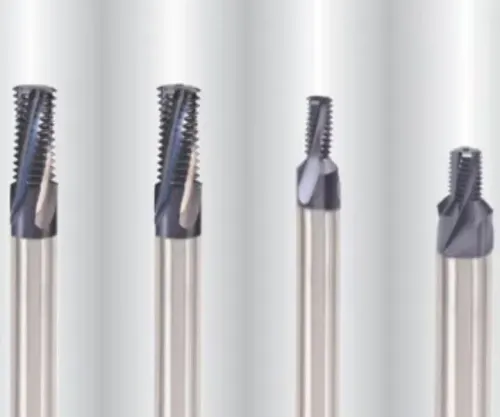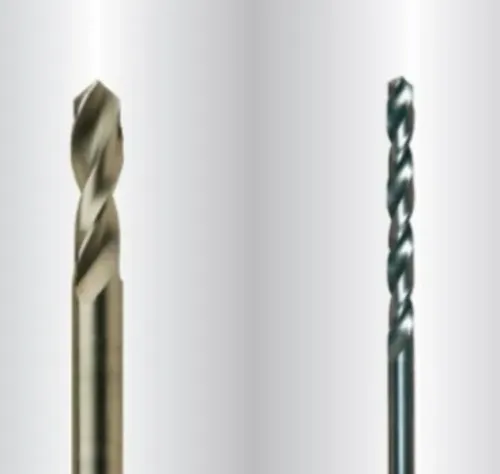


A through-hole tap must move chips out of the cutting zone without packing them into the hole or recutting them against the fresh thread. By matching the tap geometry, workpiece, pilot-hole diameter and machine settings, you can determine when a spiral point tap will reduce torque, protect thread quality and shorten the tapping cycle—and when another tap design is safer.
Key takeaways
- Use spiral point taps to push chips forward through through-holes.
- Choose straight flutes for blind holes and forming taps for ductile materials.
- Match tap geometry to material, hole depth and exit clearance.
- Set pilot-hole size and tapping-cycle parameters before machining.
How a Spiral Point Tap Moves Chips Through the Hole
A spiral point tap, often called a gun tap, uses an angled cutting face at its tip. As the tap rotates and advances, the face shears material from the thread flanks and directs each chip forward, ahead of the tool. Chips leave through the far side instead of travelling back along the flutes.
| Tap design | Chip direction | Best fit | Main consequence |
|---|---|---|---|
| Spiral point tap | Forward, toward the exit | Through-hole threading | Fast chip evacuation with less chip recutting |
| Spiral-flute tap | Back toward the shank | Blind holes | Pulls chips away from the bottom |
| Straight-flute tap | Remains around the flutes | Rigid, general-purpose work | Simple and strong, but less active chip movement |
| Thread-forming tap | Produces no chips | Suitable ductile materials | Forms the thread through pressure rather than cutting |
The forward chip stream suits a genuine through-hole because the exit provides a place for chips to escape. That reduces chip packing between the tap and the workpiece, which lowers the risk of galling, chipped edges, excessive torque and oversized threads.
The same geometry is a poor default for a blind hole: it pushes chips into the bottom, where limited space can jam the tap and cause breakage. A spiral point tap also cannot rescue a wrong tap-drill diameter. An undersize hole raises torque, while an oversize hole reduces thread engagement; both can ruin the result.
A thread-forming tap is not a direct substitute because it needs a different pre-hole and creates forming torque.
Spiral Point, Straight Flute and Forming Taps: Which Fits the Hole?
The deciding question is where the chips must go. A spiral-point tap, or gun tap, drives chips forward toward the hole exit, making it the efficient cutting choice for a genuine through-hole with enough space beyond the thread.
| Tap type | Chip direction | Speed and rigidity | Chip-recutting risk |
|---|---|---|---|
| Spiral-point tap | Pushes chips forward through the hole | High tapping speed with a strong, rigid core | Low when the exit is clear |
| Straight flute tap | Carries chips in its straight flutes | Rigid and versatile, but slower in chip-sensitive materials | Higher in through-holes because chips can remain at the cutting edges |
| Spiral flute tap | Pulls chips back toward the shank | Excellent for blind holes, with less core rigidity than a straight flute tap | Low in blind holes when chip space is adequate |
| Thread-forming tap | Produces no chips; displaces metal into the thread shape | Fast in ductile materials, but demands higher forming torque | No chip recutting, though oversized or mislocated pre-holes still cause failure |
A straight flute tap suits tough materials, interrupted cuts and short holes when controlled chip formation matters more than maximum speed. It remains a dependable general-purpose option, but packed chips can cause galling, chipped edges and oversized threads.
A spiral flute tap is the better direction for a blind hole because it pulls chips away from the bottom. Do not substitute it for a spiral-point tap in a through-hole without checking the chip path.
A thread-forming tap is not a drop-in replacement: it needs a different, usually larger, pre-hole and sufficient ductility. Choose it only when the material and forming torque support displacement rather than cutting.
Match the Tap to the Material, Hole Depth and Exit Geometry
Use a spiral-point tap when the hole passes completely through the workpiece and the exit gives chips a clear path. Controlled steel tapping, stainless steel tapping, aluminium tapping and brass tapping can all suit this geometry when the tap grade, coating and cutting conditions match the material.
| Condition | Suitability | Reason |
|---|---|---|
| Free-machining steel | Good | The forward chip stream reduces recutting and supports productive steel tapping. |
| Stainless steel | Good with correct grade | Tough, work-hardening material demands sharp geometry, stable alignment and adequate lubrication. |
| Aluminium | Good | Chips move through the exit instead of packing around the cutting teeth during aluminium tapping. |
| Brass | Good | Clean chip evacuation suits brass tapping, provided the hole is accurately drilled. |
| Blind hole | Poor default | Chips are driven into the bottom, where packing raises torque and can break the tap. |
| Cross-hole or interrupted bore | Risky | Teeth meet changing support and can snag or fracture as the cutting edge crosses the opening. |
| Deep through-hole | Conditional | Confirm the tap reaches beyond the full thread depth and that the exit can accept the chip column. |
| Limited exit clearance | Unsuitable | A nearby shoulder, fixture or second wall can block chips and erase the evacuation benefit. |
Do not judge suitability from nominal tap size alone. An undersize tap-drill hole raises engagement and torque; an oversized or mislocated hole weakens the thread and encourages misalignment. Check the actual pilot diameter, thread depth and available run-out before choosing the tap.
A genuine through-hole with a free exit is the condition that makes the design work.
Choose the Tap Specification and Control the Pilot Hole
Thread engagement and torque are set before the tap enters the hole. Specify the nominal thread size, thread pitch, tolerance class and required percentage of thread, then select the tap-drill diameter from the tap maker’s chart—not from the nominal tap size alone.
A hole that is too small raises torque and risks fracture; one that is too large produces weak, incomplete threads.
| Tap specification | Effect on the result | Check before purchase |
|---|---|---|
| Nominal thread size and thread pitch | Defines the mating fastener and material removed per tooth | Match the drawing, nut or bolt exactly |
| Tolerance class, such as 6H | Controls clearance and fit; the wrong class can reject an otherwise clean thread | Confirm the internal-thread class required by the drawing |
| Chamfer length | A long chamfer spreads cutting across more teeth; a short chamfer reaches full form sooner but increases tooth load | Match the lead length to material, alignment and available exit space |
| Lead style | Controls how the tap enters and starts the thread | Confirm the spiral-point lead is intended for a genuine through-hole |
Check the pilot hole as a process, not a visual guess:
- Measure drill diameter with a calibrated plug gauge or micrometer check.
- Confirm the hole is straight, round and concentric with the spindle.
- Provide enough breakthrough for the chamfer to clear and for chips to exit; a barely open hole can act like a blind hole.
- Keep the forming-tap drill size separate. A thread former needs a different, usually larger, pilot hole and generates forming torque rather than cutting chips.
A consistent pilot diameter improves thread percentage, torque, gauge results and tap life.
Set the CNC Tapping Cycle for Reliable Chip Exit
Set the cycle from the thread pitch, not from the tap’s nominal diameter alone. Use rigid tapping, also called synchronous tapping, so spindle rotation and axial feed remain locked together.
Apply the tapping speed formula: rpm = cutting speed × 1,000 ÷ (π × tap diameter in millimetres); program feed as rpm × thread pitch in millimetres per revolution. A feed mismatch causes flank rubbing, poor thread form or tap breakage.
Direct coolant through the hole’s chip path. Through-tool coolant can carry chips out of a deep through-hole, while an entry-side jet may leave chips packed around the tap. Check that the exit, fixture and coolant route are all clear before increasing speed.
Use these setup checks:
- Select a spiral point tap with the correct diameter, pitch, material and coating for the workpiece; verify the controlled tap-drill size rather than relying on the nominal thread callout.
- Confirm the hole is genuinely through, with enough exit clearance for the chip stream. A blocked exit turns chip evacuation into chip packing.
- Hold the tap in a rigid holder when the machine supports accurate synchronization. Use a tension-compression or floating holder only to absorb limited timing error; it cannot correct runout, misalignment or wrong pitch.
- Ask R.S. Tools & Engineers Pvt. Ltd. to verify the tap specification against your material, machine cycle and pre-hole record before a production run.
Stop if torque rises sharply or chips stop exiting; a spiral point tap cannot rescue an undersize hole or blind-hole condition.
Related products
 | Hi- Performance Spiral Pointed Taps Hi- Performance Spiral Pointed Taps Product Details: Usage For Taping ,Threading and Cutting/Drilling Purpose Color Golden, Grey and Silver Shape Straight Material Carbide View product → |
 | Spiral Point Tap Product Image Shape:Straight Usage:For Producing Nuts on Machines Color:Golden, Black and Silver Material:Carbide View product → |
Frequently asked questions
How does a spiral point tap move chips through a hole?
Its angled cutting face directs each chip forward, so chips exit through the far side instead of travelling back along the flutes.
When should you choose a spiral point, straight flute or forming tap?
Use a spiral point tap for through-holes, a spiral or straight-flute tap suited to blind-hole chip control, and a forming tap when the material is ductile and thread forming is appropriate.
What should you match when selecting a tap?
Match the tap specification to the workpiece material, hole depth, thread size, pilot-hole diameter and exit geometry.
How do you set a CNC tapping cycle for reliable chip exit?
Set the correct spindle speed, feed for the thread pitch, tapping depth and reversal timing so the tap reaches the exit and retracts without packing chips.