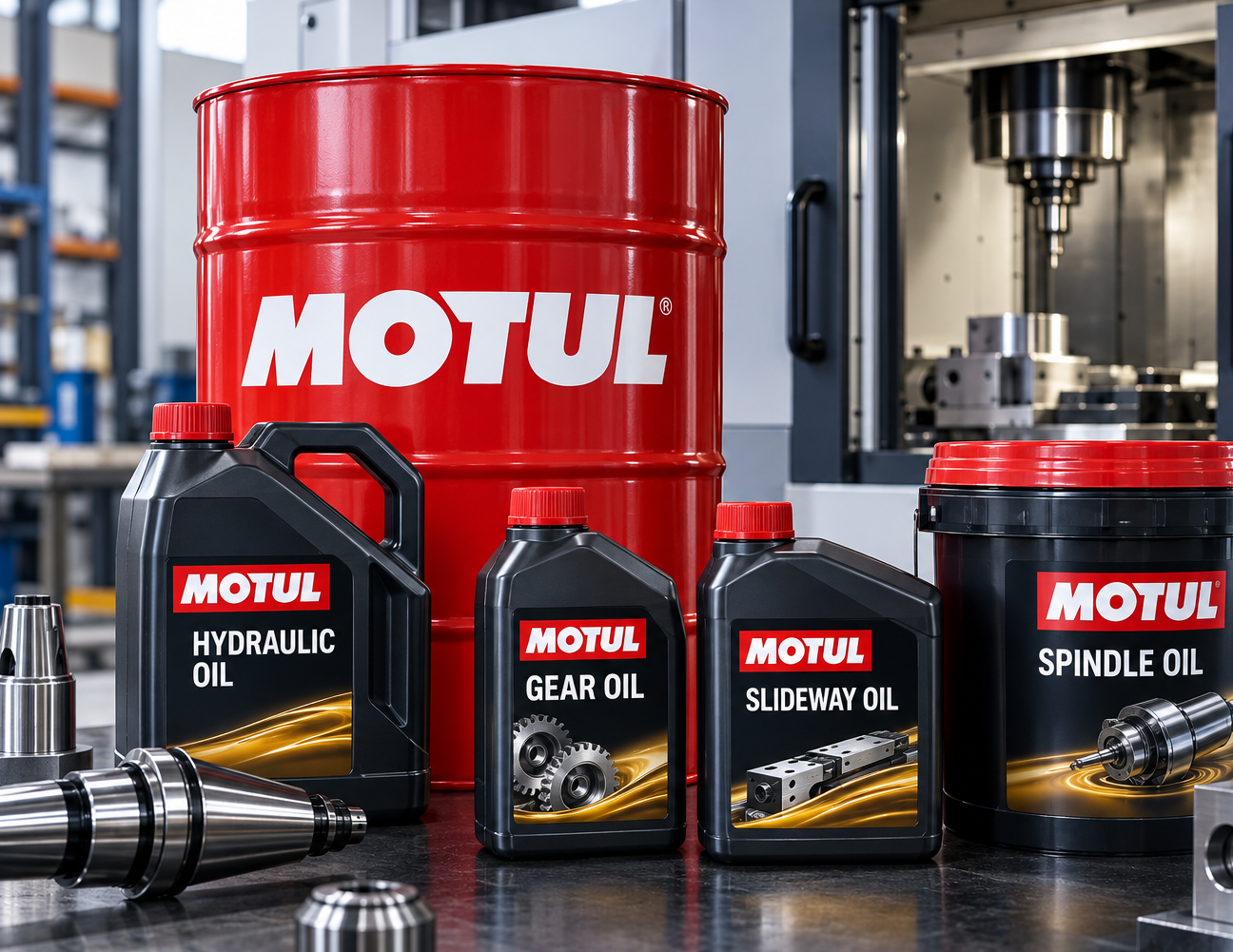
Lubricants are sometimes treated as routine consumables, yet incorrect lubricant selection can contribute to wear, temperature problems and unnecessary maintenance. Manufacturing businesses considering MOTUL oil for CNC machines or industrial equipment should first identify exactly where and how the lubricant will be used.
Industrial facilities in Delhi may operate CNC machines, conventional machine tools, fabrication equipment and other mechanical systems, each with different lubrication requirements.
Identify the Lubrication Point
A machine can require several different lubricants.
Depending on its design, lubrication may be required for:
- Hydraulic systems
- Gearboxes
- Slideways
- Bearings
- Spindles
- General mechanical components
One oil should not automatically be assumed suitable for every lubrication point.
The equipment manufacturer's specification should be the primary reference when identifying required viscosity and performance characteristics.
Viscosity Is Important
Oil viscosity affects how easily a lubricant flows and how it behaves between moving surfaces.
Using a lubricant with unsuitable viscosity can affect system response, lubrication-film formation and operating efficiency.
Rather than selecting oil because it is readily available, maintenance teams should confirm the required grade and specification for the equipment.
Watch for Contamination
Correct oil can still perform poorly when contamination is uncontrolled.
Dust, metal particles, water and other contaminants can enter industrial lubrication systems through maintenance activities, damaged seals or operating conditions.
Good practices include:
- Keeping storage containers closed
- Using clean transfer equipment
- Avoiding mixing of unidentified oils
- Checking seals and breathers
- Following appropriate filtration practices
- Labelling lubricant containers clearly
Clean handling is particularly important in machine shops where fine metal particles are common.
Do Not Mix Oils Without Verification
Adding a different lubricant to an existing system without checking compatibility can create unnecessary risk.
Different products may use different additive systems or base-oil formulations. When a lubricant change is planned, maintenance personnel should confirm whether draining, flushing or another changeover procedure is appropriate.
Keeping accurate records helps prevent accidental mixing.
Build Lubrication Into Preventive Maintenance
Lubrication should not be managed only when a machine develops a problem.
A simple preventive-maintenance schedule can identify the lubrication point, required oil, inspection interval and responsible person.
Teams can also monitor changes in:
- Oil appearance
- Leakage
- Operating temperature
- Unusual noise
- Oil consumption
- Filter condition
Unexpected changes may indicate a mechanical or lubrication issue that deserves investigation.
Buying Industrial Lubricants in Delhi
Delhi's manufacturing environment includes workshops where equipment availability directly affects delivery schedules. Maintaining the correct lubricant stock can therefore be important for planned maintenance.
R.S. Tools & Engineers Pvt. Ltd. supplies industrial tooling and engineering products to manufacturing customers in Delhi. When enquiring about MOTUL oil for industrial use, buyers should ideally provide the machine type, lubrication point and required specification rather than requesting oil by brand alone.
The correct lubricant is the one that meets the equipment's technical requirement and operating conditions. Verification of specifications, clean storage, controlled handling and documented maintenance can help industrial users manage lubrication more effectively while reducing avoidable maintenance problems.