
A nut-tapping line succeeds or fails before the tap enters the workpiece: blank dimensions, pilot-hole quality, material behaviour and thread specification determine torque, cycle stability and finished-thread acceptance. By the end, you will be able to match tap geometry and operating conditions to the nut, control the process from piercing to sorting, and judge performance by acceptable parts rather than speed alone.
Key takeaways
- Match tap geometry to the nut’s hole and thread path.
- Select tap material and coating for the nut material.
- Set speed, feed and lubrication to stabilise each tapping cycle.
- Inspect pre-holes, threads and sorted nuts before shipment.
Where tapping fits in a high-volume nut line
1. Nut blank preparation shapes the raw material into the outside form, including flats, corners and thickness. The line must control distortion here because a misformed blank can later sit crooked in the chuck or fixture.
2. Piercing and drilling holes create the pre-hole that the tap will finish. Hole diameter, straightness, burrs at entry and exit, drill wear and work-hardening directly affect tapping torque and thread size. Inspecting only the tap misses these upstream causes.
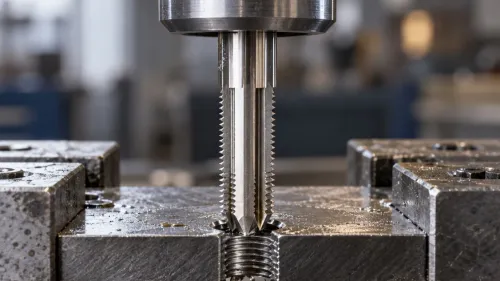
3. In the nut-tapping line, the tap cuts or forms the internal thread to the specified diameter, pitch and depth. Rigid tapping keeps spindle rotation and axial feed synchronized, giving repeatable cycles; a floating holder can absorb small feed or alignment errors but cannot correct a badly aligned machine.
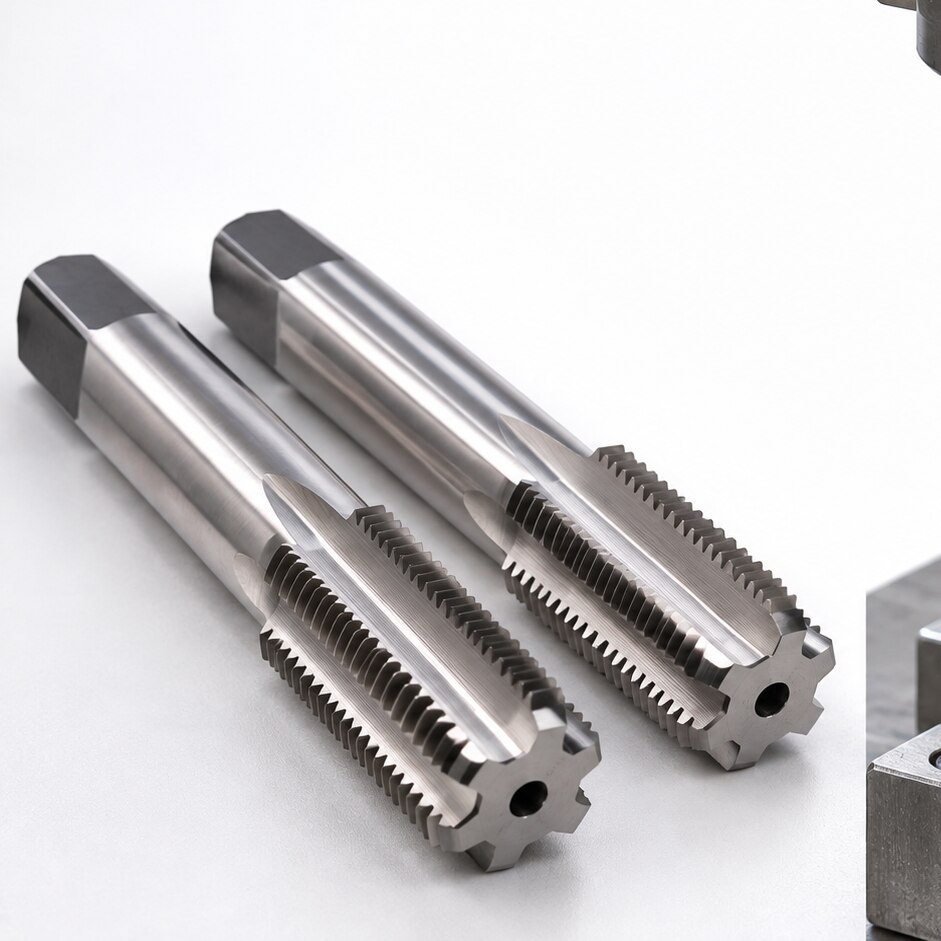
4. Through-threaded nuts commonly use a spiral-point tap that drives chips ahead of the tool. A blind or restricted thread needs a geometry that manages chips within the available depth, so the tap choice follows the hole path rather than speed alone.
5. After tapping, gauges check thread acceptance, while checks for burrs, damaged threads, cracks and seating defects identify rejected parts. Automatic sorting removes failures before assembly, and records linking defects to pre-hole condition, machine settings or tap life help prevent repeat repeats.
In high-volume nut manufacturing, the tap is one controlled stage in a chain: a reliable pre-hole, synchronized tapping, inspection and sorting together produce an accepted part.
Match tap geometry to the hole and thread path
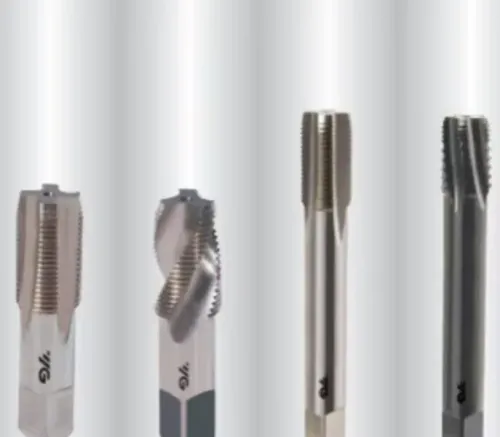
Choose the tap from the hole’s material flow and chip path: use cutting taps when the material is unsuitable for displacement, cold-forming roll taps when ductile material can flow, and spiral-point taps when a cutting tap must push chips through the exit.
| Option | What it does | When it applies |
|---|---|---|
| Cutting taps | Remove material and create chips | Use for hard, brittle or otherwise non-formable materials, or when the pre-hole and thread percentage require controlled cutting |
| Cold-forming roll taps | Displace material into the thread without producing chips | Use for sufficiently ductile materials with adequate elongation; select the larger forming-hole diameter from the manufacturer’s table |
| Spiral-point taps | Cut the thread while driving chips forward | Use primarily for through-holes, especially in high-volume nut production where chips can exit the far side |
Through-holes give chips a clear escape route, so spiral-point taps usually reduce chip packing and torque. A spiral-flute cutting tap pulls chips toward the shank and belongs mainly in blind holes, where chips cannot exit ahead; using it in a through-hole can add torque without improving output.
Blind holes also demand enough unthreaded depth for the tap point and chip volume. Stop the tap before the point bottoms out, or the tool can break and leave incomplete thread depth.
Cold-forming roll taps produce no chips, but they still need a controlled forming depth, correct pilot-hole size and high-lubricity tapping lubricant; reusing a cutting-tap drill size can cause excessive torque, oversize threads or breakage.
Select the tap from the nut’s specification and material
The tap must match the nut material, thread standard, nominal diameter and pitch, internal-thread tolerance, hole diameter, and required full-thread depth. A tap that matches only the outside diameter can still produce the wrong flank angle, pitch diameter, or thread engagement.
| Standard | Identify | Selection consequence |
|---|---|---|
| ISO metric threads | M designation, nominal diameter, pitch, and tolerance class | Choose the corresponding metric tap and tolerance allowance |
| UNC and UNF threads | Inch nominal diameter, threads per inch, and UNC or UNF series | Match the unified thread form; coarse and fine taps are not interchangeable |
| Pipe threads | NPT, BSPT, or BSPP designation and sealing requirement | Use the specified taper or parallel pipe tap, not a general-purpose fastener tap |
Confirm whether the hole is through or blind, then compare the hole depth with the tap’s chamfer length and required thread depth. A blind nut needs clearance below the full thread so the tap point does not bottom out; an undersized clearance zone can stop the cycle or break the tool.
Treat the pre-hole as part of tap selection. Check drill diameter, straightness, entry and exit burrs, drill wear, and work-hardening from piercing or drilling. For a forming tap, use the manufacturer’s forming-hole table for the material and thread percentage; do not reuse a cutting-tap drill size.
Forming needs ductile material that can flow, while cast iron and brittle alloys can crack, generate excessive torque, or produce incomplete threads.
Set speed, feed and lubrication for repeatable cycles
Establish the cycle from thread geometry, measured pre-hole size and the tap maker’s operating range, not from a tap’s colour or base material.
In rigid CNC tapping, calculate axial feed from spindle speed and thread lead: feed in millimetres per revolution equals the lead for a single-start thread, while a multi-start thread requires pitch multiplied by the number of starts.
A mismatch can overload the tap, distort the thread or cause premature failure even when tapping speed appears acceptable.
Choose lubrication by the tapping process. A cutting tap needs lubricant that reduces friction and helps evacuate chips. A forming tap needs a high-lubricity forming lubricant to control sliding and forming torque; coolant suitable for cutting can be unsuitable for forming.
Run controlled trials across the manufacturer’s recommended speed range, then measure torque and verify thread acceptance before releasing production settings. Compare cost per acceptable nut, not cycle time alone: higher tapping speed can shorten the cycle while sharply reducing tool life and increasing tap changes or stoppages.
Check the pre-hole size and entry edge before blaming the tap; a worn drill or burr changes forming load. A floating holder can absorb small feed errors, but it cannot correct poor alignment or replace rigid CNC tapping.
Control thread quality from pre-hole inspection to sorting
Reject the cause, not just the nut: a passing GO/NO-GO thread-gauge check cannot explain why a thread failed. Control the pre-hole and tapping signals before parts enter downstream assembly.
1. Measure pre-hole diameter, straightness and depth at a defined sampling interval. Check entry and exit burrs, drill wear and work-hardening from piercing or drilling. Use the forming-tap manufacturer’s hole table; a cutting-tap drill size can create excessive forming torque or breakage.
2. Record tapping torque for each machine, material and tap. A rising trend points to a restricted or undersized hole, dull cutting edges or poor lubrication; sudden peaks indicate chip packing, misalignment or feed-and-spindle mismatch.
3. Inspect failed samples for tap failure signatures. Sudden breakage narrows the search to chip packing, pilot-hole size, alignment or synchronisation. Progressive oversize threads indicate wear, while built-up edge directs attention to speed, lubricant or material condition.
4. Run GO/NO-GO thread gauges at the control point, then examine torn or folded material. Confirm pitch diameter and minor diameter through periodic dimensional inspection; a gauge alone does not measure every functional feature.
5. Link results to tool-life tracking by cavity, machine, batch and hole count. Quarantine the interval after a torque alarm or failed gauge, identify the cause, correct it, and sort affected nuts before release.
R.S. Tools & Engineers Pvt. Ltd. can support this control plan by matching a cutting, forming or spiral-point tap to the recorded hole condition rather than replacing tools by appearance.
Related products
 | Nut- tap Product Image Supply Ability:500 Per Day Usage:For Cutting, Shaping and Grinding Purpose Color:Silver and Black Material:Carbide, High Speed Steel... View product → |
 | Cold Forming Roll Tap Cold Forming Thread Tap Product Image Color:Black and Grey Product Type:Cold Forming Material:Carbide Shape:Straight View product → |
Frequently asked questions
Where does tapping fit in a high-volume nut manufacturing line?
Tapping follows nut blank preparation and creates the internal thread after the outside form and pre-hole are produced.
How do you match tap geometry to a nut’s hole and thread path?
Compare the tap’s point style, flute form and lead with the hole type, blind or through-hole path, chip evacuation needs and thread profile.
How do you select a tap for the nut specification and material?
Use the nut’s thread standard, pitch, nominal diameter, material and required class to choose the correct tap size, material and coating.
How do you control thread quality in high-volume nut production?
Inspect pre-hole diameter and alignment, verify cutting conditions and lubrication, then check finished threads with gauges and sort defective nuts.
Related product
 | Spiral Point Tap Product Image Shape:Straight Usage:For Producing Nuts on Machines Color:Golden, Black and Silver Material:Carbide View product → |