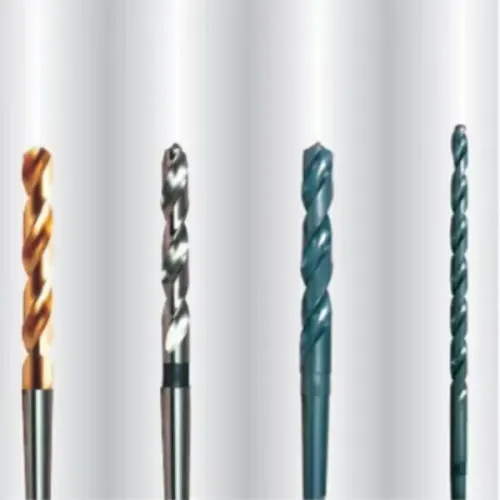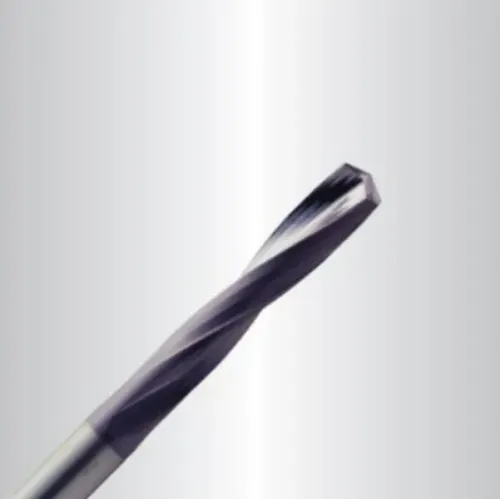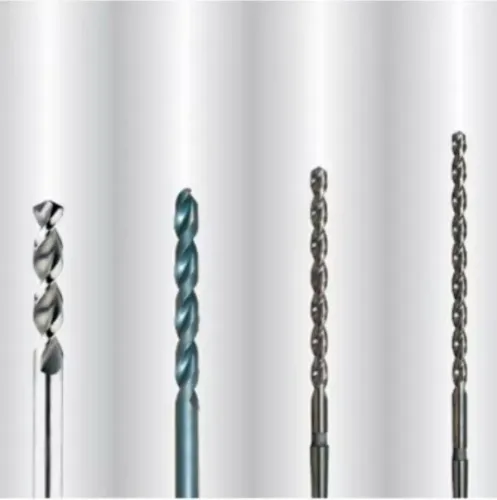

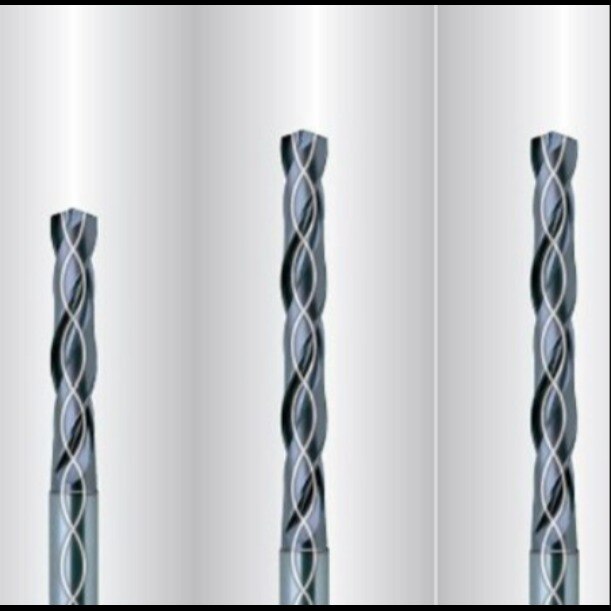
Stainless steel punishes a drill that rubs, dwells, overheats or packs with chips. You will be able to match an Inox Dream variant to the stainless grade, machine setup and hole requirement, then verify the cutting data and operating limits before production.
Key takeaways
- Use dedicated geometry to prevent rubbing and work hardening.
- Choose carbide or HSS according to rigidity, volume and hole depth.
- Keep the drill cutting; avoid dwell, pecking and chip packing.
- Check edge wear, torque, chips and hole finish before scrap occurs.
Why stainless steel demands a dedicated drill geometry
Stainless steel drilling demands dedicated geometry because rubbing or dwelling creates work hardening before the edge cuts cleanly. Low thermal conductivity keeps heat near the tool, while high cutting forces and long, tough chips increase torque and create chip-packing risk.
An Inox Dream design uses a stainless-oriented point to reduce wandering and limit the rubbing produced by a large chisel edge. Positive, continuous cutting matters: stopping in the hole can harden the surface and accelerate edge failure.
Compare these catalogue details before selecting a variant:
| Feature | What to compare | Why it matters |
|---|---|---|
| Point angle and split point | Stated angle and split-point form | Controls entry, wandering and chisel-edge rubbing |
| Helix angle and flute count | Helix value and number of flutes | Balances chip lifting against chip space |
| Web thickness and margin design | Core size and margin width | Affects thrust, guidance and hole-wall rubbing |
| Edge preparation and flute polish | Honed edge and polished flute surfaces | Manages edge strength and chip flow |
| Substrate and coating | HSS or carbide, coating name and use | Determines toughness, heat resistance and cutting data |
| Diameter range and flute length | Available sizes and usable flute length | Prevents overhang and depth-related chip packing |
Annealed 304 stainless steel and 316 stainless steel are the primary ISO M targets. Verify separately for 410, 420, duplex and precipitation-hardening grades; their toughness and hardening behaviour differ. Stainless suitability does not make the drill optimal for aluminium, cast iron or hardened steel.
When to choose carbide or HSS for the same stainless job
Carbide and HSS Inox Dream drills are not interchangeable. Choose a carbide stainless drill for a rigid CNC machine, stable fixturing, high-volume production and demanding hole-count targets; choose an HSS stainless drill when toughness matters more than maximum production rate.
| Option | Best fit | Main limitation |
|---|---|---|
| Carbide | Rigid CNC, stable workholding, continuous cuts, high hole counts | Vibration, deflection or interrupted cutting can chip the edges |
| HSS | Hand-fed drilling, less rigid machines, interrupted cuts | Lower production rate and lower allowable cutting data |
Carbide supports higher cutting data only when the machine maintains speed, feed, thrust and torque without vibration. A light or unstable setup can turn its nominal speed advantage into chipped corners and scrap holes. HSS tolerates shock better, so it may be the better commercial choice for difficult setups.
Calculate spindle speed with n = 1000 × Vc ÷ (π × D), where Vc is cutting speed in metres per minute and D is drill diameter in millimetres. Feed rate equals f × n; select feed per revolution for the diameter and stainless grade rather than copying one value across sizes.
Obtain the individual SKU’s speed, feed and coolant recommendation. Do not apply one figure to every stainless grade: annealed 304, 316, duplex, 410 and precipitation-hardening grades differ in cutting behaviour and allowable data.
How to set up the drill, coolant and hole cycle
A clean stainless-steel hole starts with rigidity, not a more aggressive cycle: clamp the work securely, keep tool overhang short, align the spindle and hole axis accurately, and hold low runout. Clean the collet or holder, then confirm that the machine has enough thrust and torque for the selected diameter and material.
1. Read the drawing before setting the cycle. Select drill diameter and tolerance for the finished hole; choose shank size for the holder, flute length for the required hole depth, and overall length for access without unnecessary extension. Identify whether the hole is through, blind, countersunk at entry, or intended for subsequent reaming.
2. Flood the cutting edge continuously with stainless steel coolant, or use through-tool coolant. Through coolant becomes more valuable as depth and chip load increase because it carries chips away and removes heat where external flow cannot reach.
3. Set peck drilling from the drill’s rated hole depth and chip-breaking method, not an arbitrary canned-cycle value. Avoid repeated short pecks that interrupt cutting and cause rubbing; use controlled pecking only when chip evacuation requires it.
4. Use pilot hole guidance by diameter only after checking the manufacturer’s data. An unnecessary pilot can reduce guidance or leave a step that packs chips.
5. Maintain feed through breakthrough and never dwell at the bottom or exit. Remove chips without withdrawing so frequently that the drill rubs the wall; keep the edge cutting to prevent a hardened layer.
How to recognise failure before the hole is scrapped
Stop the cycle at the first warning: squealing, blue chips, built-up edge or rising thrust indicate excessive heat, poor lubrication, unsuitable speed or feed, chip packing, or a work-hardened surface.
1. If squealing starts, check coolant delivery, spindle speed, feed and chip evacuation. Blue chips confirm overheating; packed chips raise thrust and can weld a built-up edge to the cutting edge.
2. Measure the hole before running another part. Oversize holes, poor finish or chipped margins point to runout, deflection, blunt edges, unstable workholding, excessive overhang or breakthrough shock. Check the holder, collet seating and workpiece clamping before blaming the drill.
3. Keep positive feed through the hole. Rubbing, dwelling at the bottom, repeated uncontrolled pecking and continuing with a blunt drill harden stainless steel and accelerate edge failure. Maintain feed at breakthrough rather than pausing.
4. Inspect both cutting edges and margins under magnification. Remove chips with pliers or a brush, never by hand; curled stainless chips can cut deeply. Wear eye protection, use secure workholding and chip guards, and follow stainless steel drilling safety controls.
5. Record tool life against stainless grade and condition, carbide or HSS choice, coolant delivery, cutting data, hole depth and machine rigidity. Replace a worn drill before it hardens the next hole, and store it clean and dry to prevent corrosion.
A wrong choice costs longer cycles, premature failure, scrap holes and rework. Excessive thrust can also damage the spindle or workholding components.
How to verify that an Inox Dream variant fits the operation
1. Approve an Inox Dream variant for production only when the actual stainless grade falls within its stated range, the hole depth stays within flute capacity, the setup is rigid, coolant reaches the cutting zone and the machine holds the specified speed and feed.
Confirm drill diameter selection against the drawing, hole tolerance and available tool clearance.
2. Reject the choice until separately verified for hardened stainless steel, deep holes beyond flute capacity, cross-holes and interrupted exits. Do not use a variant on a machine that cannot maintain its specified conditions; vibration, chip packing and edge failure will erase any productivity gain.
3. Drilling can produce a production-ready hole when the drawing permits the process capability. Choose reaming after drilling when the drawing demands tighter size, roundness or surface finish than drilling can reliably hold.
4. Before buying, request the dimensional drawing, available diameters, tolerance class, shank and flute dimensions, overall length, coating specification, substrate, recommended speeds and feeds, coolant arrangement, maximum hole depth, batch traceability and technical datasheet. In Delhi, R.S. Tools & Engineers Pvt.
Ltd. can confirm the exact Inox Dream SKU, documentation and application fit; treat the family name alone as insufficient specification.
Related product
 | Inox Dream Drills Product Type:Dream Drills Material:Carbide, High Speed Steel Usage:For Cutting and Drilling Purpose Shape:Straight Color:Black Supply Ability:500 Per... View product → |
Frequently asked questions
Why does stainless steel need dedicated drill geometry?
Stainless steel work-hardens when the drill rubs or dwells. Dedicated geometry helps the edge cut cleanly, evacuate tough chips and manage heat and torque.
When should you choose carbide instead of HSS for stainless steel?
Choose carbide when the machine is rigid and you need higher productivity or consistent production. Choose HSS when the setup is less rigid, interrupted or better suited to a tougher, more forgiving tool.
How should you set up the drill, coolant and hole cycle?
Use the manufacturer’s cutting data, secure the workpiece, aim coolant into the flutes and keep the drill cutting. Adjust the cycle to prevent chip packing without allowing dwell.
How can you recognise drilling failure before scrapping the hole?
Watch for rising torque, squealing, discoloured chips, poor chip evacuation, edge chipping, oversize holes and rough bore walls. Stop and inspect before the defect spreads.
How do you verify that an Inox Dream variant fits the operation?
Match the variant’s diameter, flute length, point geometry, coating and material range to the stainless grade, hole depth, machine rigidity, coolant method and required tolerance.