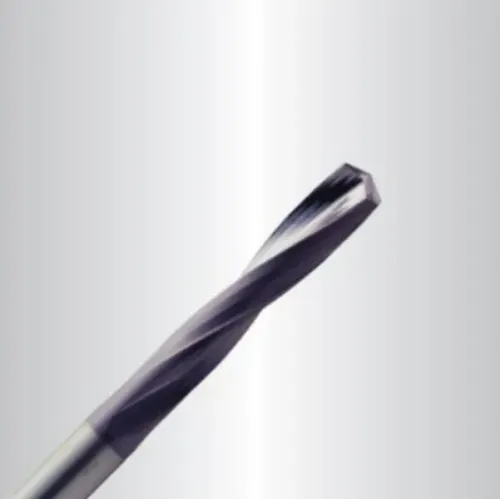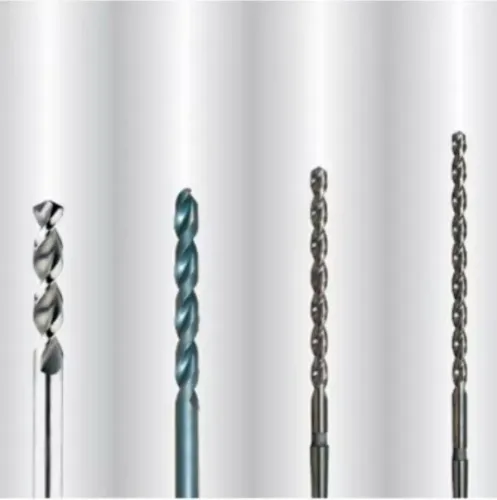

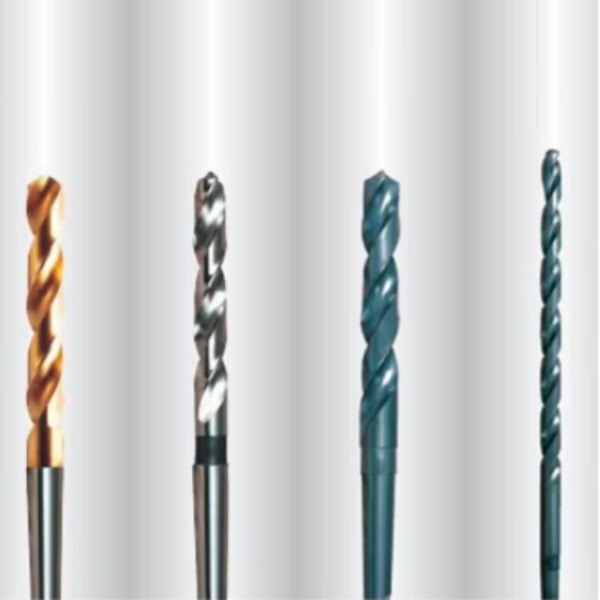
Heavy drilling places more demand on the tool connection than a light hole in a thin plate: torque spikes, bending forces, vibration and chip loading expose weak seating quickly. You will be able to match the Morse taper to the machine, install it without creating runout, and select cutting conditions that use its rigidity without exceeding the drill or spindle.
Key takeaways
- Use a matching Morse taper socket and tang to transmit heavy drilling torque.
- Match the MT size to the machine spindle, drill diameter, and drilling load.
- Clean both taper surfaces and seat the drill fully to prevent runout.
- Set speed, feed, pecking, and coolant for the material and hole depth.
Why a Morse taper handles heavy drilling better than a drill chuck
Torque reaches a Morse taper shank drill through the wedging force and friction created when its male taper seats in the machine’s matching female socket. The tang engages the spindle’s drive slot, while the accurately matched taper surfaces hold the drill without chuck jaws.
This self-holding taper places the cutting tool close to the spindle, reducing the extra interfaces and overhang introduced by a chuck.
Compared with a parallel-shank drill held in a chuck, the arrangement can provide:
- Greater rigidity because the drill is mounted directly in the spindle or sleeve.
- Lower runout risk when the socket and shank are clean, undamaged and properly seated.
- Better torque transmission because the taper’s broad contact area resists rotation under load.
- Less chuck slip during heavy-duty drilling operations, especially when a large drill would require a reduced cylindrical shank.
The advantage is not unlimited. A Morse taper is a friction-held connection, not a keyed positive drive. Excessive torque, poor alignment, a blunt cutting edge or chip packing can make the shank turn in the socket, causing fretting and galling on both surfaces. Clean seating and correct cutting conditions matter.
Morse taper shank drills also let you use larger diameters than the available chuck capacity would permit. The taper carries the drill’s larger shank directly instead of forcing it through a small chuck, but the correct rpm and feed still depend on diameter, material, depth and machine power—not the MT number alone.
How to match the MT size to the machine and hole
Choose the taper from the receiving spindle first, then confirm the drill diameter and reach; diameter alone does not determine the MT size. Read the socket marking on the machine spindle, quill or tailstock, and compare it with the marking on the drill shank.
| MT size | Machine-side meaning | Selection guidance |
|---|---|---|
| MT1 | Smallest listed taper | Use only when the receiving socket is marked MT1 and the drilling load suits the machine |
| MT2 | Small-machine taper | Common on bench equipment; select it when both spindle and drill are MT2 |
| MT3 | Medium taper | Choose for a machine with an MT3 socket and drills requiring more shank capacity |
| MT4 | Large taper | Use with an MT4 spindle for higher-capacity drilling; do not fit it into an MT3 socket |
| MT5 | Very large taper | Reserve for machines specifically equipped with an MT5 socket and suitable spindle power |
Confirm the match before installation:
- Check the female socket marking, male shank marking and a taper gauge if either marking is missing.
- Measure the drill’s cutting diameter, flute length and overall length against the machine’s stroke, workpiece thickness and required hole depth.
- Check the tang shape and dimensions against the spindle’s drift slot; a tang does not repair a mismatched taper.
- Use a correctly specified sleeve only when necessary. An MT3 drill can enter an MT2 machine through an MT3-to-MT2 sleeve, but the added length and mating surface increase runout and reduce rigidity.
How to seat, secure and remove the drill without creating runout
Runout often begins before the spindle turns. A chip, oil film, rust spot or raised burr between the male taper and machine spindle socket prevents full taper seating, reducing friction and allowing vibration, slipping or drill ejection.
1. Stop and isolate the machine. Open the spindle socket and inspect its bore, drive slot and shoulder with a light. Remove chips and coolant residue with a lint-free cloth; use a non-shedding brush for the socket.
2. Wipe the drill shank completely clean and dry. Do not install it with cutting oil on the taper. Oil can reduce friction and let the shank rotate during a heavy cut.
3. Inspect both tapers by touch and sight. Reject the setup until you remove rust, galling, dents or burrs with the correct fine stone or repair method. Never file away the taper’s geometry.
4. Check the drill tang for bending, mushrooming, cracks or impact marks. A damaged drill tang can prevent seating in the spindle slot and complicate removal.
5. Align the drill tang with the socket slot, insert the shank straight, and push it firmly home. Do not twist, hammer the cutting end or use a dirty sleeve; those actions create eccentric seating.
6. Rotate the spindle by hand to confirm free clearance, then verify runout with a dial indicator on the drill body. Remove and reseat it if the reading changes or exceeds your machining tolerance.
Remove the drill with the spindle stopped by supporting it and driving the tang through the machine’s drift slot with the correct drift key. Never strike the spindle or drill directly.
How to set speed, feed, pecking and coolant for heavy drilling
Set spindle rpm and feed from the drill diameter, workpiece material, hole depth and machine power—not from the Morse taper number. Calculate spindle rpm from cutting speed: rpm = 1,000 × cutting speed ÷ π × drill diameter. Feed rate then equals spindle rpm × feed per revolution.
| Variable | Setting change | Why it matters |
|---|---|---|
| Diameter | Reduce spindle rpm as diameter increases; select feed per revolution from the drill maker’s chart | A large drill needs torque, and excessive rpm overheats its cutting edge |
| Workpiece material | Lower cutting speed for hardened steel, stainless steel or heat-resistant alloys; use sharper, more positive geometry for aluminium | Hard or gummy materials generate heat, work-hardening and chip blockage |
| Hole depth | Reduce feed and use a shorter peck depth as depth increases | Long chips and rising bending load cause seizure, wandering or an oversized hole |
| Machine power | Reduce feed or drill diameter when the motor stalls, belt slips or rpm drops | A taper transmits torque, but it cannot compensate for insufficient horsepower |
For a shallow hole in mild steel, continuous drilling with flood coolant can work. For a deep hole, peck before chips pack the flutes: withdraw far enough to clear them, and reduce peck depth as the hole becomes deeper. Direct coolant into the cutting zone, not only onto the shank.
Use cutting oil for slower heavy cuts when the machine and material allow it; use flood coolant when heat removal and chip flushing dominate. Stop if the drill chatters, squeals or produces discoloured chips.
How to choose the complete drill rather than the taper number alone
A straight, stable hole depends on the cutting end and the setup, not the MT number alone. A Morse taper is a mounting standard: two MT2 drills can have different point geometry, flute length, material and coating, producing very different results.
| Factor | Choose | Avoid |
|---|---|---|
| Drill geometry | Match the drill point angle to the workpiece; use a split point for easier centring and lower wandering. Select a helix that carries chips out of the hole. | A general-purpose point in hard material, or a geometry that packs chips into a deep hole. |
| Length | Use the shortest flute length that reaches the required depth. For deep-hole drilling, use extra length only when reach demands it. | Excess flute length, which increases bending, chatter and hole oversize. |
| Material | HSS M2 suits general steel work; cobalt improves heat resistance in tougher alloys. Use carbide only with a rigid, low-runout machine and controlled feed. | A brittle cutting material on a flexible machine or poorly supported workpiece. |
| Coating | Select a coating that matches the workpiece and coolant plan, then follow its speed and feed data. | Treating colour as evidence of performance. |
| Workholding | Clamp the work securely, support thin stock, and use the shortest compatible sleeve with minimal quill extension. | A loose vise, unsupported sheet, long extension or misaligned spindle. |
When comparing options, R.S. Tools & Engineers Pvt. Ltd. can help you check flute length, point form and material against the hole depth and machine rigidity rather than selecting by taper size. A larger shank resists bending at the connection, but it cannot prevent a long cutting section from deflecting.
Related products
 | Morse Taper Shank Drills Product Details: Color Green, Silver and Golden Usage For Cutting and Drilling Purpose Shape Straight Material Cobalt and Carbide View product → |
 | HSS M2 TAPER SHANK TWIST DRILLS HSS M2 TAPER SHANK TWIST DRILLS Supply Ability:500 Per Day Shape:Straight Usage:For Drilling Machine Purpose Material:High Speed Steel Product Type:Taper Shank Twist Drills... View product → |
Frequently asked questions
Why does a Morse taper handle heavy drilling better than a drill chuck?
Its wedging friction and spindle tang transmit torque without relying on chuck jaws, reducing slipping during heavy drilling.
How do you match the Morse taper size to a machine and hole?
Confirm the machine spindle’s female MT size, then select a drill whose diameter, length, and load suit the hole.
How do you seat, secure, and remove a Morse taper drill without creating runout?
Clean and inspect both taper surfaces, seat the drill firmly in line, and use the machine’s drift slot to remove it.
How should you set speed, feed, pecking, and coolant for heavy drilling?
Set cutting speed and feed for the workpiece and drill material, then use pecking and coolant when chip evacuation or heat demands it.
Related product
 | HSS DRILLS Types of HSS Drills PARALLEL SHANK TWIST DRILLS (Jobber, Long, Extra Long, Stub, Step Drills, Sub Land Drills and Core Drills) TAPER SHANK TWIST... View product → |