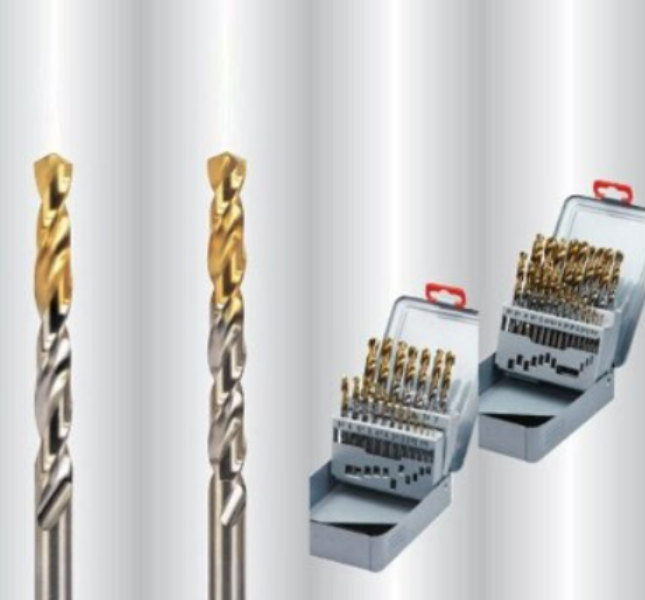
Selecting a drill for industrial production involves much more than matching the tool diameter to the drawing. Workpiece material, hole depth, machine capability, production volume and expected finish can all influence drilling performance.
For manufacturers evaluating Gold P Drills, understanding the intended application is the first step towards achieving consistent machining results.
R.S. Tools & Engineers Pvt. Ltd., based in Delhi, works with industrial cutting-tool requirements where drill selection can directly influence productivity, tool consumption and finished component quality.
What Should Manufacturers Look for in a Gold P Drill?
Industrial drilling subjects a cutting tool to continuous mechanical and thermal stress. A suitable drill needs to cut efficiently while maintaining sufficient strength at the cutting edge.
Several characteristics influence performance:
Cutting geometry: Geometry affects how the drill penetrates the material, forms chips and controls cutting forces.
Tool rigidity: Greater stability can help reduce unwanted vibration and deflection during drilling.
Wear behaviour: Predictable wear makes it easier for production teams to plan tool changes instead of waiting for sudden tool failure.
Chip evacuation: Effective removal of chips becomes increasingly important as hole depth increases.
Application compatibility: A drill should always be selected according to the material and machining conditions rather than its name alone.
Applications Across Delhi's Engineering Sector
Delhi and the broader NCR manufacturing ecosystem includes fabrication businesses, automotive component manufacturers, machine shops, tool rooms and general engineering companies.
Gold P Drills may be considered for production environments requiring consistent drilling of engineering components. Depending on the exact drill specification, applications can range from routine component machining to repeated production drilling.
Manufacturers should confirm the recommended workpiece material range before introducing any drill into production.
Why Chip Control Deserves Attention
Chip control is sometimes overlooked when drilling performance is evaluated.
Poorly controlled chips can accumulate inside a hole, increase friction and interfere with coolant access. The result may be additional heat, surface damage or cutting-edge deterioration.
Operators should monitor the shape and evacuation of chips during initial machining trials. Changes in chip formation can also provide an early indication of tool wear or unsuitable cutting parameters.
Choosing a Drill for Production
Before selecting a Gold P Drill, manufacturers should define:
- Workpiece material and grade
- Required hole diameter
- Hole depth
- Through-hole or blind-hole requirement
- Production quantity
- Machine spindle condition
- Tool-holder compatibility
- Required tolerance and finish
This information creates a much stronger basis for selection than simply replacing an existing drill with another tool of the same diameter.
Manufacturers should also evaluate performance over a representative production run. One successful component does not establish whether a drill will remain stable across hundreds of machining cycles.
For industrial users in Delhi, Gold P Drills should ultimately be assessed on consistency, application suitability and overall machining performance. A correctly selected drilling tool can contribute to smoother production while reducing avoidable rework and unpredictable tool changes.