
A gold-coloured drill is not automatically a carbide tool, a hardened-steel tool or a precision-hole solution. You will be able to identify what a Gold P Drill actually specifies, match its geometry and substrate to industrial work, calculate starting cutting data, and reject it when another drill or a reamer is the safer choice.
Key takeaways
- Confirm the coating and HSS grade; Gold P is not a universal material standard.
- Set speed, feed, coolant and workholding for the workpiece and drill diameter.
- Choose carbide for rigidity and precision, cobalt HSS for heat-resistant alloys.
- Inspect burrs, oversize holes and chipping to identify failure causes early.
What “Gold P” identifies—and what the colour leaves unknown
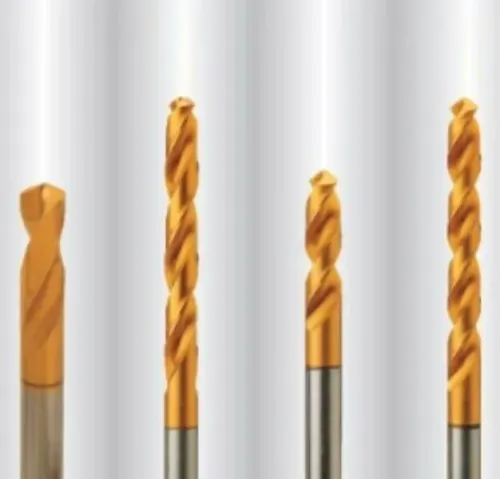
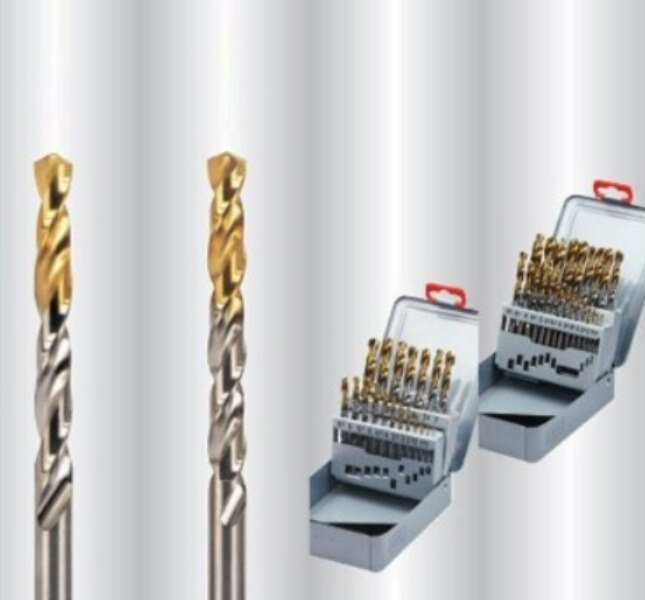
Treat a Gold P drill as a TiN-coated HSS drill only after the product specification confirms both the coating and the steel grade. The Gold P drill meaning is usually a manufacturer’s product-family designation for general-purpose jobber drills, not a universal material standard.
A gold drill coating identifies appearance or a coating family; it does not prove TiN, carbide construction or hardened-steel capability.
- Confirm the coating name: TiN, another gold-coloured coating or an uncoated surface treatment.
- Confirm the substrate grade: conventional HSS, cobalt HSS, powder-metal HSS, solid carbide or carbide-tipped construction.
- Confirm the drill type: twist, step, centre, core or another form.
- Check point angle, helix angle, flute count, flute length, body diameter, overall length and flute standard.
- Check diameter tolerance, shank form and gauge-length limits before ordering or setting the holder.
- Read the manufacturer’s intended material range, cutting-speed chart and feed data for the exact diameter and workpiece grade.
Do not select it for hardened steel because the colour looks premium. Ordinary steels and cast irons fit conventional TiN-coated HSS applications; hardened, abrasive or high-strength materials can require cobalt HSS, powder-metal HSS or carbide geometry.
Resharpening also removes coating from the cutting edge and can alter the point, so a reground drill needs controlled geometry and recoating before you assume new-tool wear resistance.
Geometry, substrate and coating determine the workable application
A gold coating will not rescue poor geometry. The point angle controls centring and thrust: a split point reduces walking on thin sheet, cross-holes and uneven surfaces, while a conventional 118-degree point may need spotting, a pilot hole or rigid workholding.
The helix angle governs chip evacuation; a higher helix suits gummy alloys, whereas a slower helix supports controlled cutting in tougher materials.
| Material | Construction and geometry choice | Main risk |
|---|---|---|
| Steel | TiN-coated HSS with a standard point and moderate helix | Excessive speed overheats the edge; use carbide when removal rates or rigidity demand it |
| Cast iron | HSS with a robust point and flute design that clears abrasive chips | Abrasive fines accelerate flank wear; hardened or heavily abrasive grades need a more wear-resistant substrate |
| Stainless steel | Cobalt HSS or suitable HSS, with a split point and geometry that limits rubbing | Dwell and low feed cause work-hardening, turning a good edge into a damaged one |
| Non-ferrous metals | High-helix or polished flutes with an edge treatment intended for aluminium and suitable lubricant | Aluminium can weld to the cutting edge even through TiN |
Flute count and length also set the workable range. More flute length improves access but weakens the body and increases deflection; a shorter drill leaves a stiffer tool and straighter hole. Verify that the substrate is HSS, cobalt HSS, solid carbide or carbide-tipped construction, because coating colour alone does not establish performance.
Set speed, feed, coolant and holding conditions before drilling
Do not apply one catalogue speed to every Gold P diameter: choose cutting data from the drill substrate, diameter, workpiece grade, hole depth, coolant and machine rigidity. Use this setup sequence:
1. Select the manufacturer’s cutting speed range for the confirmed high-speed-steel drill and workpiece. Calculate spindle speed with the spindle rpm formula: rpm = 1,000 × cutting speed in metres per minute ÷ (π × drill diameter in millimetres). A larger diameter therefore runs at a lower rpm for the same cutting speed.
2. Set feed per revolution, then calculate feed rate by multiplying feed per revolution by spindle rpm. Do not raise rpm while leaving feed unchanged; the drill can rub, work-harden stainless steel and damage its cutting edges.
3. Match coolant to the workpiece and hole depth. Use a sharp drill, rigid clamping, continuous positive feed and effective coolant for stainless steel. For holes several drill diameters deep, use peck drilling with chip-clearance pauses; packed chips increase torque and can snap the drill.
4. Control holding conditions before cutting. Check collet, hydraulic or shrink-fit grip, tool projection and holder runout. Excessive runout makes one lip cut harder, causing oversize holes, uneven wear and edge chipping.
5. Reject an ordinary jobber drill for demanding depth-to-diameter ratios unless chip evacuation is proven. Choose a long-reach or coolant-through drill when the hole depth, access or production cycle exceeds what the flutes can clear safely.
Choose Gold P against carbide, cobalt HSS and precision-hole tooling
Choose a Gold P Drill when you need economical, repeatable holes in ordinary steel, cast iron or non-ferrous metal, but production volume does not justify carbide’s higher purchase cost. Its value is balanced performance, not the highest metal-removal rate.
| Option | What it offers | Select it when |
|---|---|---|
| Gold P versus carbide | Lower tool cost and forgiving general-purpose performance | Hole tolerances are moderate and cycle time is not the main constraint |
| Cobalt HSS | Better hot hardness and wear resistance than standard HSS | You are drilling stainless steel, high-strength steel or abrasive material |
| Solid carbide drill | Higher rigidity, speed and hole consistency | A rigid CNC setup, high output and demanding hole quality justify its cost |
| Reamer | Controlled sizing and improved finish after drilling undersize | The drawing specifies a close hole tolerance or a finished bore |
Do not choose by colour alone. Confirm that the Gold P specification identifies TiN-coated HSS, the workpiece grade and the manufacturer’s cutting data. For hardened steel, deep holes, interrupted cuts or unstable machines, cobalt HSS, powder-metal HSS or a solid carbide drill can be the safer choice.
A nominal drill diameter does not define the finished hole. Drill undersize, then use reaming when hole tolerance, cylindricity or surface finish matters; forcing a jobber drill to produce a precision hole creates scrap.
R.S. Tools & Engineers Pvt. Ltd. can help compare a Gold P specification with carbide or high-accuracy tooling against your material, machine rigidity and required hole tolerance.
Related product
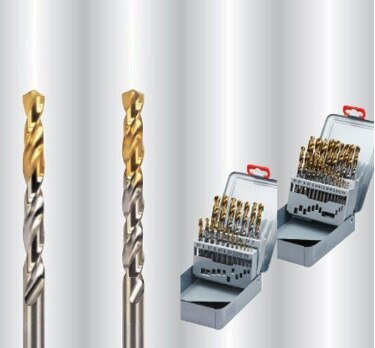 | Gold P Drills Supply Ability:500 Per Day Usage:For Cutting and Drilling Purpose Color:Silver and Golden Shape:Straight Material:Others, Metal View product → |
Recognise failure, inspect the hole and manage tool life
An oversize hole is not proof that the cutting edges alone are worn. Check holder runout and gauge length first: uneven lip loading can enlarge the hole, create asymmetrical wear and chip one edge. Inspect the collet, hydraulic or shrink-fit holder before changing cutting data.
Use a consistent inspection routine after a defined number of holes:
- Check the cutting lips and margins under magnification for flank wear, edge chipping, built-up material and heat discolouration.
- Measure hole diameter with a plug gauge, bore gauge or calibrated air gauge; record oversize holes rather than accepting the nominal drill diameter as the finished tolerance.
- Perform burr inspection at the entry and exit. A rising exit burr, torn edge or rough surface indicates deteriorating edge condition or poor chip evacuation.
- Check hole position and cylindricity when the application demands more than ordinary drilling accuracy.
Record the drill identification, diameter, batch, machine, holder, material, cutting data, coolant and hole count. Traceability shows whether failure follows one tool, setup or material lot.
TiN-coated HSS drills permit resharpening and recoating, but grinding removes coating from the edge and can alter point geometry. Use a qualified reconditioner, then mark the tool as reconditioned; do not expect new-tool wear resistance.
Replace the drill when chipping recurs, measured wear exceeds your agreed limit, torque rises, or hole size leaves tolerance after correcting runout. For close-tolerance holes, drill undersize and finish with a reamer or boring tool.
Frequently asked questions
What does Gold P identify on a drill?
Gold P is usually a manufacturer’s product-family designation for general-purpose jobber drills. Confirm the product specification before assuming it is TiN-coated HSS or identifying its steel grade.
How should you set up a Gold P drill?
Set spindle speed and feed from the drill diameter, workpiece material and tool specification. Secure the workpiece, use suitable coolant, and prevent the drill from wandering or rubbing.
When should you choose Gold P over carbide or cobalt HSS?
Choose Gold P for general-purpose drilling when the machine and workholding are stable. Choose carbide for rigid, high-volume or precision work, and cobalt HSS for tougher heat-resistant alloys where extra hot hardness is needed.
What signs show that a Gold P drill is failing?
Inspect for excessive burrs, oversize or rough holes, squealing, a worn margin, chipped lips and discoloured cutting edges. Match the sign to speed, feed, coolant, alignment or workholding problems before replacing the tool.